An Analysis on Panama : Lessons from UK, AU & DE
Panama is where the UK, Australia and Germany were five to eight years ago. Its model is the strictest of the four. It is the only one with a national patient registry and certified diagnoses.
Green Ark · · 3 min read
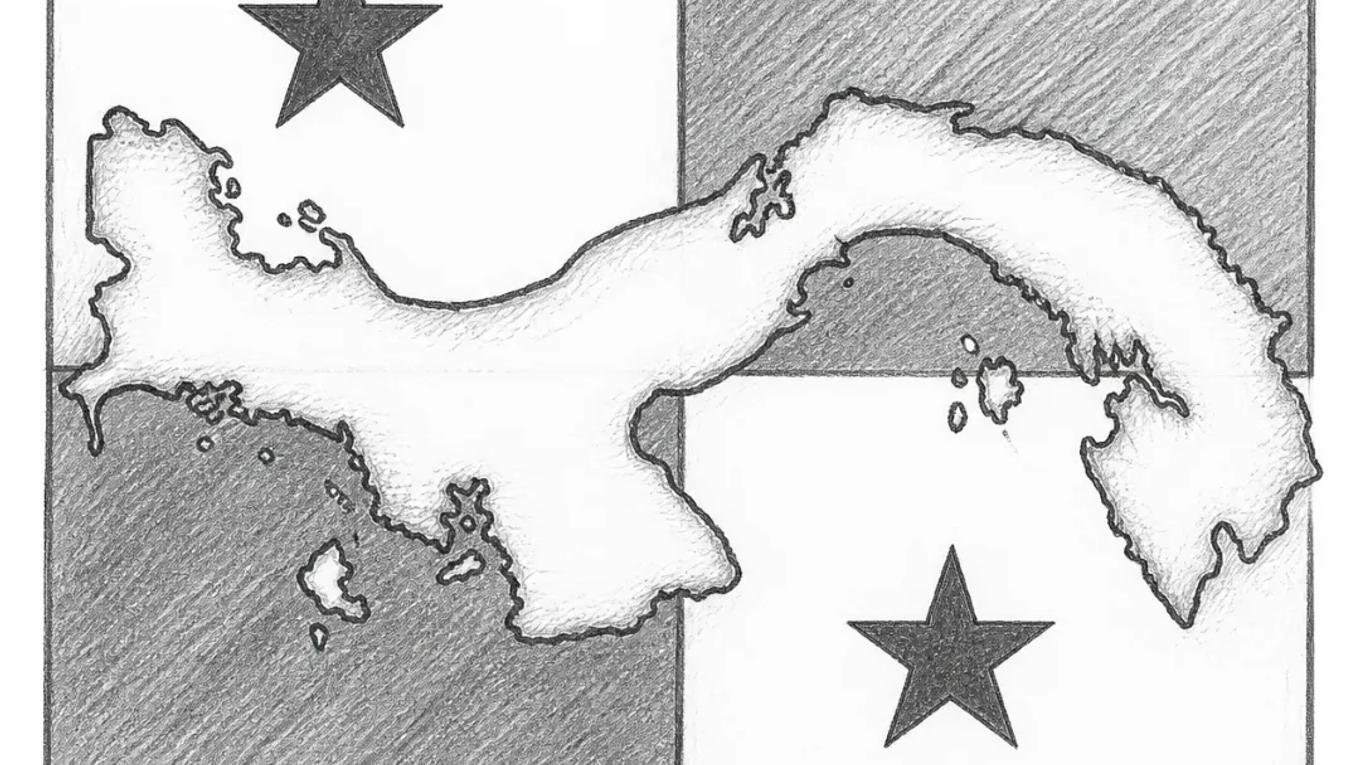
Panama is where the UK, Australia and Germany were five to eight years ago. It has a law and a patient registry, but supply is still tiny: all imported, mostly CBD, sold through one licensed pharmacy (a second is being assessed), with 22 CBD products authorised around the start of 2026. Its model is the strictest of the four. It is the only one with a national patient registry and certified diagnoses.
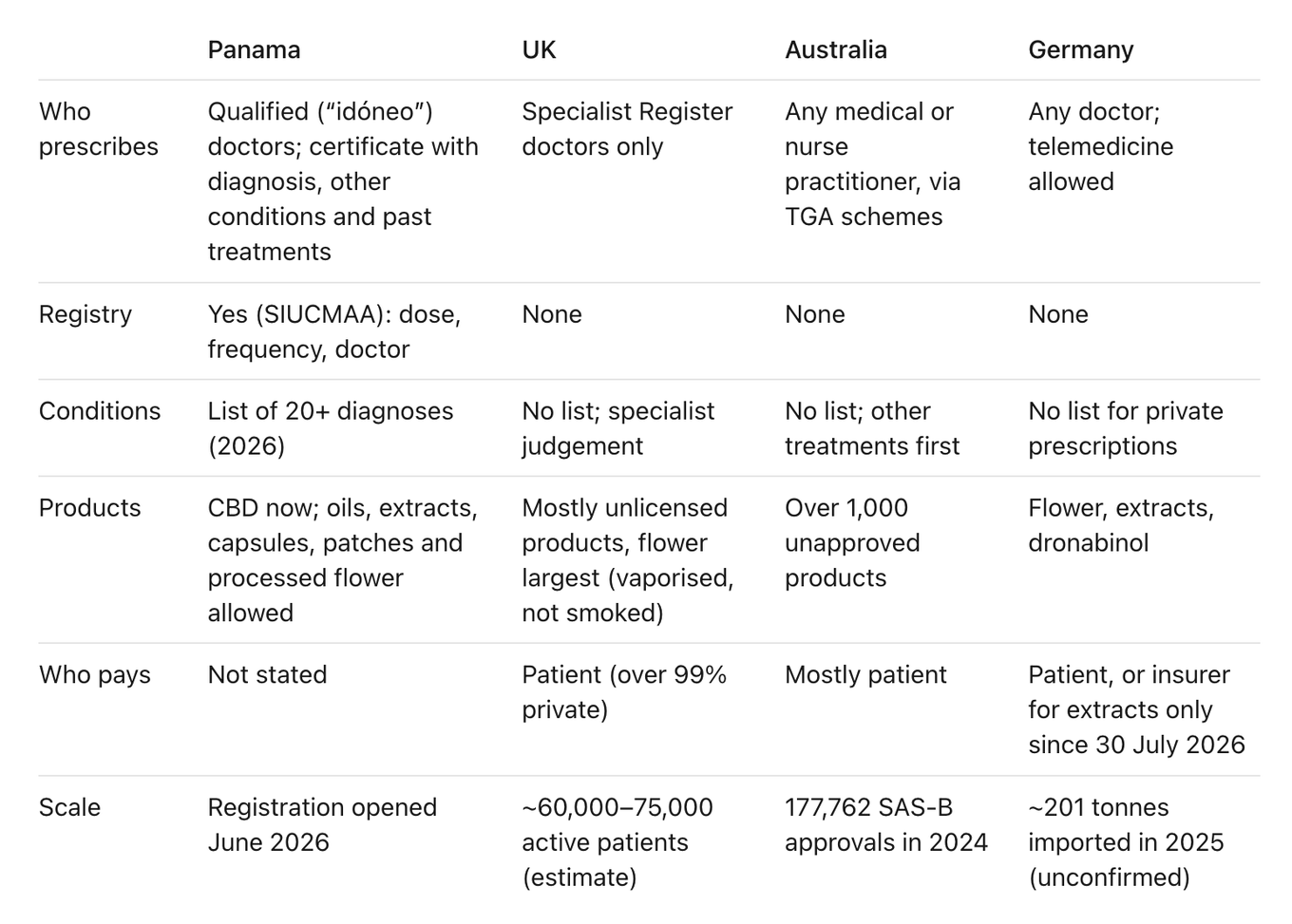
What Panama could do differently, based on the evidence
- Turn the registry into an evidence engine, not just a gate. The UK has no official patient count, and estimates range from 60,000 to 140,000. Germany ran a five-year official study of about 21,000 treatment cases. It found that 76% were for chronic pain and about a third stopped within a year. Panama already records dose and frequency. Adding outcomes and side effects, and publishing anonymised results, would make it the best-documented programme in the region.
- Choose the middle path on prescribers. The UK’s specialist-only rule left about 180 doctors prescribing, with the top 10 writing roughly half of all prescriptions. Germany’s any-doctor-plus-telemedicine model grew fast but triggered a backlash: a bill to require in-person first visits, and doctors’ leaders calling for tighter rules. When the Czech Republic let family doctors prescribe in April 2025, prescribing rose about 40%. Panama dropped its mandatory prescriber course in 2025. Any licensed doctor, a short course and an in-person first consultation would avoid both extremes.
- Don’t let a stopgap become the system. Australia’s exception routes now carry over 99% of supply. The TGA itself says the framework is no longer fit for purpose and is struggling to fix it. Panama’s two-year import window is a similar stopgap. It should set product quality standards now, as Germany did by requiring EU-GMP and the European Pharmacopoeia flower standard, and accept GMP from recognised regulators so the product range can widen quickly.
- Decide who pays. UK access depends on what patients can afford, because private insurers generally exclude these products. Germany’s insurers now cover standardised extracts but not flower, and the Czech Republic reimburses 90%. Costa Rica’s law lets its public health fund list cannabis medicines. Panama could put a few standardised extracts on the public health fund’s list (Caja de Seguro Social) for its strongest-evidence conditions.
- If flower is allowed, define how it is used. The UK prescribes flower but bans smoking it, so patients vaporise. Germany kept flower legal but stopped insurers paying for it. Panama’s 2026 resolution lists processed flower, so it should set the method of use and dose guidance now.
- Write advertising rules before platforms arrive. Germany’s highest civil court ruled in March 2026 that an online portal broke the ban on advertising prescription medicines. UK clinics may advertise the consultation but not the product or its price. Clear rules early prevent the “medical in name only” platforms Germany is now trying to rein in.
- If export is an ambition, build to EU-GMP from day one. Germany is Europe’s biggest importer and raised its import quota to 192.5 tonnes in late 2025. Producers in countries without GMP equivalence with the EU need an EU inspection before they can supply it.
Caveats: UK patient numbers and Germany’s 2025 import figure are estimates, not official counts. The article doesn’t say whether patients pay or what products cost in Panama. Our sources also differ on which decree regulates Law 242. The knowledge base says Decree 121 of 2022 regulates it and Decree 6 of 2025 amended it; the article calls Decree 6 the regulation.
Sources:
- Revista THC: Medical cannabis in Panama
- Green Ark knowledge base: Panama, UK, Australia, Germany, Czech Republic and Costa Rica articles (including NHS: medical cannabis, BfArM: medical cannabis, and SÚKL dispensing statistics)
This is information, not legal advice.
Information, not legal advice. Check the primary source before relying on it.